Color as Character: Palette Shifts Fueling Narrative Turns in Contemporary Cinema
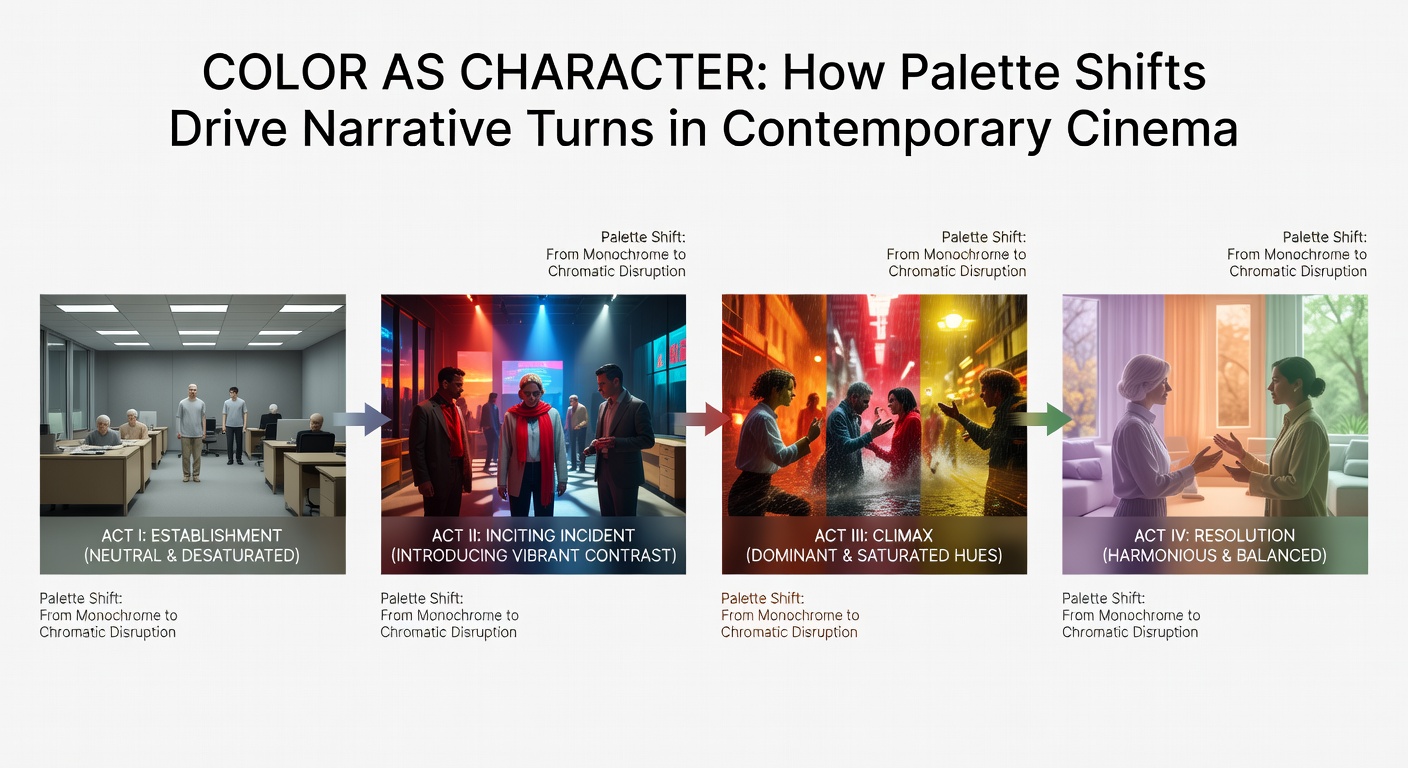
Contemporary cinema relies on deliberate color palette adjustments to signal key plot developments and character transformations, with directors coordinating hue changes alongside editing rhythms and sound design. These shifts function as visual markers that guide audience perception without explicit dialogue, drawing from established color theory principles refined through decades of technical experimentation.
Early experiments in the 1990s established foundations for this approach, yet recent productions integrate digital grading tools to achieve precise control over tonal ranges. Data from industry reports indicate that more than 85 percent of major studio releases since 2015 employ some form of palette modulation during post-production, according to analysis compiled by the American Film Institute.
Technical Foundations Behind Palette Decisions
Color grading pipelines now allow cinematographers to isolate specific wavelength bands and adjust saturation levels frame by frame, creating seamless transitions that align with story beats. Researchers at UCLA's School of Theater, Film and Television documented how desaturated blue tones frequently precede moments of isolation or loss, while warmer amber gradients mark shifts toward resolution or confrontation.
These choices stem from both psychological research on color association and practical constraints of digital sensors, which capture wider dynamic ranges than earlier film stocks. Observers note that the same scene can convey entirely different narrative weight depending on whether primary colors remain dominant or secondary tones receive emphasis during the final grade.
Case Examples from Recent Releases
Films such as "Dune: Part Two" demonstrate how gradual warming of desert palettes signals expanding character agency, moving from cool, restricted earth tones into richer oranges as alliances form. Similarly, "Oppenheimer" alternates between stark monochrome sequences and saturated color passages to differentiate subjective memory from documented events, a technique that underscores chronological complexity.
In "Everything Everywhere All at Once," rapid palette jumps between multiverse iterations visually distinguish parallel realities, allowing viewers to track narrative branches without additional exposition. Each universe maintains its own dominant color family, from muted greens to intense pinks, reinforcing thematic fragmentation through consistent visual rules.
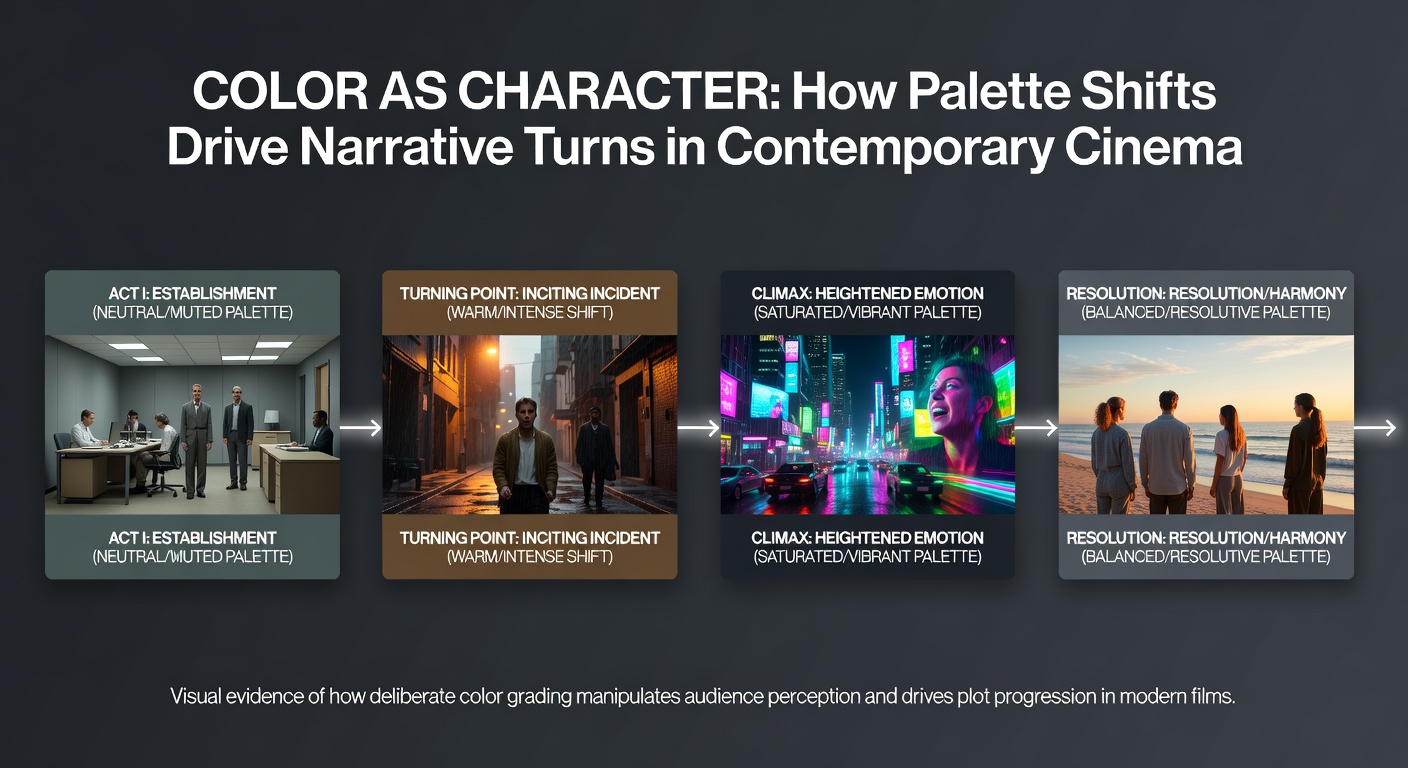
Animation studios have adopted comparable methods, with productions like "Spider-Man: Across the Spider-Verse" using distinct chromatic signatures for each alternate dimension. These choices extend beyond aesthetics to support plot mechanics, where color collisions during character crossings emphasize dimensional instability.
Audience Response and Industry Trends
Viewer studies conducted across multiple markets reveal that audiences register palette shifts subconsciously, often reporting heightened emotional engagement during color-driven transitions. Industry organizations tracking box office patterns have observed that films deploying strategic color modulation tend to maintain stronger second-weekend holds, suggesting these visual cues help sustain narrative momentum beyond initial marketing hooks.
As productions prepare for May 2026 release windows, color pipeline planning now occurs earlier in pre-production, with directors collaborating directly with colorists to embed palette arcs into storyboards. This integration reflects broader technological advances in real-time grading software that permits on-set verification of intended tonal shifts.
Conclusion
Palette manipulation has evolved from a post-production polish into a core narrative device, with contemporary filmmakers treating color as an active participant in plot progression. Continued refinement of digital tools ensures these techniques will remain central to visual storytelling, providing directors with precise methods for guiding audience attention through increasingly complex narrative structures.