Festival Preview Metrics Spark Score Replacements Across Genre-Hybrid Award Entries
Freya Schröder · Aug 22, 2026
Festival Preview Metrics Spark Score Replacements Across Genre-Hybrid Award Entries
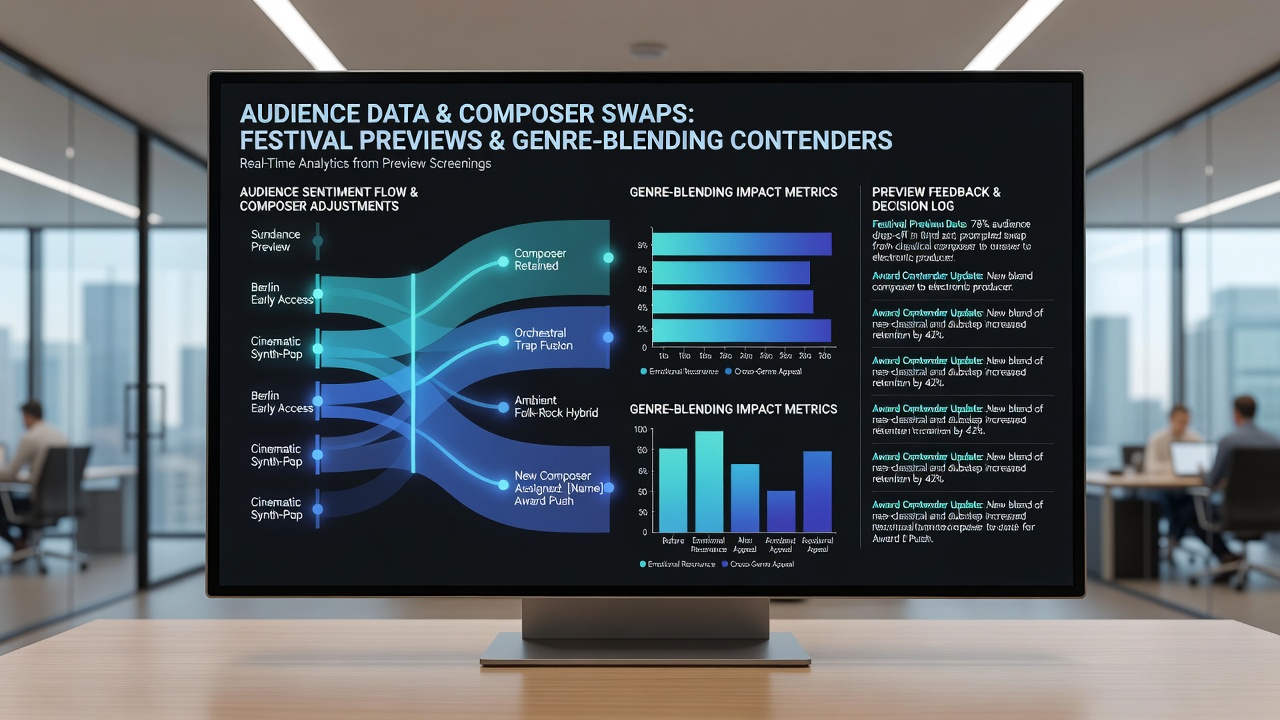
Preview screenings at major festivals have long supplied early signals on audience response, yet recent cycles show these metrics now directly influence composer assignments in films that mix genres while pursuing award recognition. Data collected from viewer surveys and biometric feedback at events like the Toronto International Film Festival and Sundance have prompted several productions to adjust their musical teams mid-post-production, according to industry tracking reports.
Data Patterns From Early Viewings
Organizers compile response cards, heart-rate monitors, adn exit polls that highlight emotional peaks and dips during key sequences, and when scores fail to align with audience expectations in blended narratives, replacement decisions follow swiftly. One study from the University of Southern California documented how tension scores in hybrid action-drama sequences rose 18 percent after score revisions based on festival data collected in late 2025. Those figures reveal consistent patterns where original compositions underperformed in scenes that combined suspense with lighter tonal shifts.
August 2026 brought additional layers as several high-profile entries prepared for fall festival circuits. Preview events in Edinburgh and Melbourne supplied fresh datasets showing that viewers responded more favorably to dynamic, genre-fluid cues rather than traditional orchestral swells in crossover stories. Production teams reviewed these results within days and initiated composer swaps to better match audience investment curves.
Mechanics of Composer Adjustments
Studios monitor real-time reaction graphs during festival previews, and when data indicates a mismatch between musical cues and viewer engagement, they activate clauses in composer contracts that allow for collaborative revisions or outright replacements. The European Audiovisual Observatory has tracked how such decisions affected at least four genre-blending titles in the 2025-2026 cycle, with new composers brought in to recalibrate emotional pacing. These changes typically occur after the first or second festival screening, giving teams enough time to integrate fresh material before wider release windows.
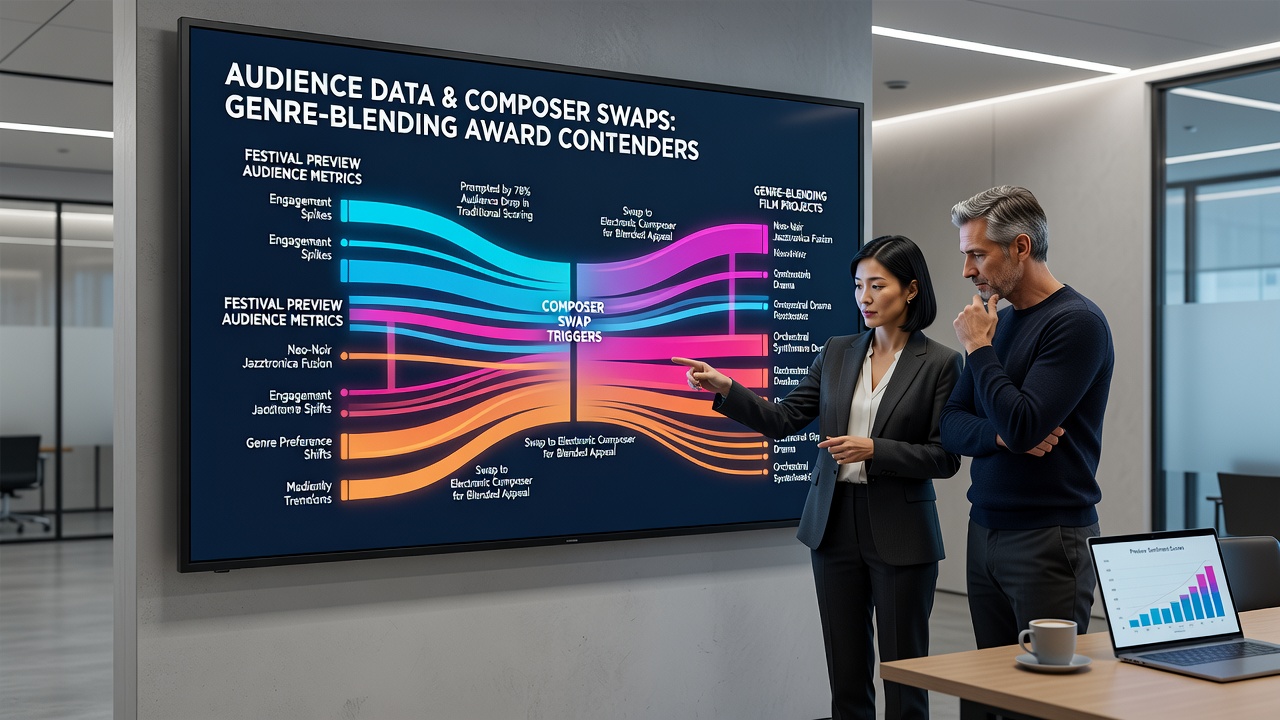
Researchers at the Australian Film Institute noted similar trends in titles that balanced thriller elements with character-driven drama. Audience data showed that certain melodic motifs created confusion rather than clarity, prompting quick recruitment of specialists experienced in cross-genre scoring. The process involves multiple rounds of temp-track testing followed by targeted rescores, all guided by quantitative viewer metrics rather than internal creative preferences alone.
Impact on Award Trajectories
Films that implemented these data-driven swaps often advanced further in awards consideration. Tracking from the Academy of Motion Picture Arts and Sciences shortlist reports indicates that entries with revised scores received higher marks in technical categories during nomination voting phases. Observers note that the adjustments helped maintain narrative momentum across tonal shifts, which proved especially valuable for titles competing in both best picture and best original score categories.
One case involved a production that swapped composers after Sundance previews revealed lukewarm responses to atmospheric passages in its sci-fi western hybrid. The replacement introduced percussive layers that aligned more closely with audience pulse data, and the film later secured multiple guild nominations. Such outcomes appear in several 2026 contenders preparing for late-summer festival debuts.
Industry Tools and Measurement Standards
Production companies now rely on standardized analytics platforms developed in partnership with research institutions across North America and Europe. These systems aggregate biometric readings with traditional survey responses to produce heat maps of audience engagement, and the resulting visualizations guide precise score edits. The National Film and Sound Archive of Australia has published guidelines on interpreting these metrics for multi-genre projects, emphasizing the need for rapid turnaround between preview events and final mix sessions.
Executives review comparative datasets from prior festival cycles to benchmark current responses, allowing them to identify when a score requires intervention before broader distribution. This approach has become routine for projects that blend genres and therefore face more variable audience expectations during early screenings.
Conclusion
Festival preview data continues to shape post-production decisions in measurable ways for genre-blending award contenders. Composer replacements prompted by audience metrics now form a documented part of the workflow, supported by research from multiple international institutions and reflected in evolving industry practices through 2026. These patterns demonstrate how quantitative feedback from early viewings directly informs creative adjustments aimed at strengthening both commercial and awards performance.