Mirrored Environments: How Recurring Set Designs Illuminate Character Progression in Ensemble Film Series
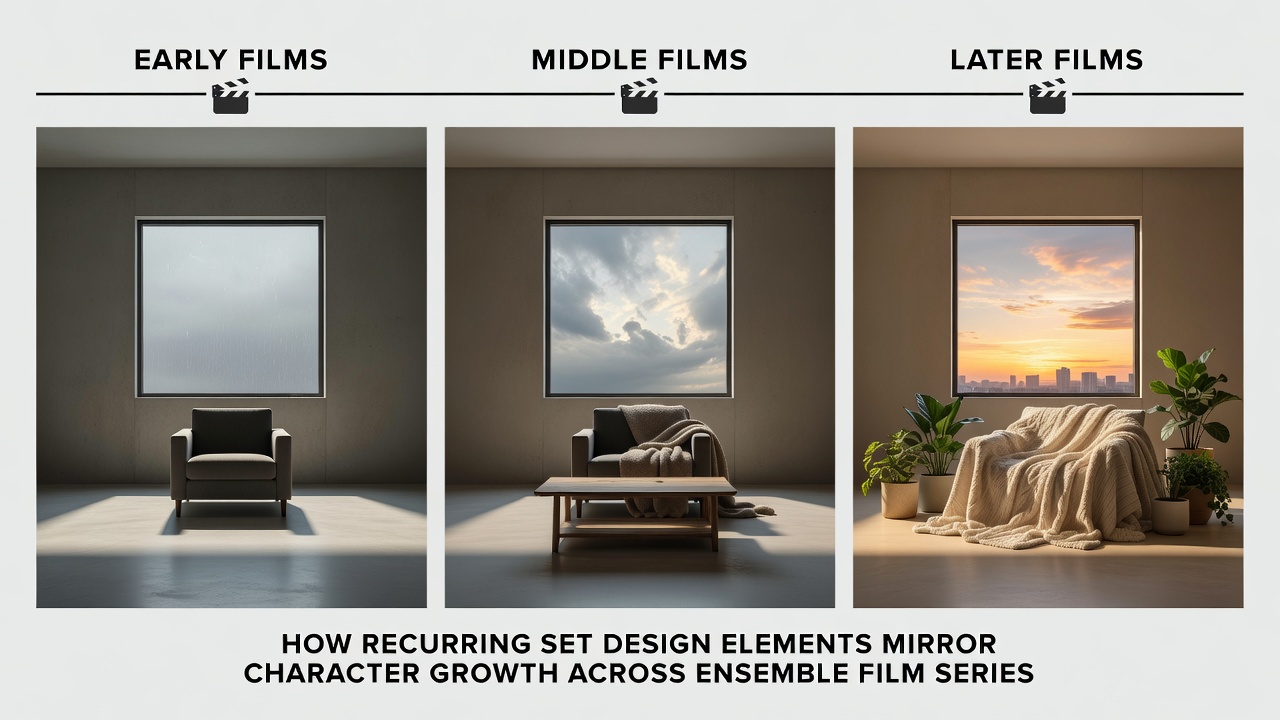
Ensemble film series often rely on consistent set design motifs that shift gradually alongside character development, and observers note these patterns across multiple franchises spanning decades of production. Production teams reuse architectural features, color palettes, and object placements in ways that signal internal changes without explicit dialogue, while data from industry reports shows audiences register these visual cues subconsciously during repeated viewings. Researchers at film studies programs have documented how such elements function as narrative anchors in long-running stories involving multiple protagonists.
Core Motifs Established in Opening Chapters
Initial entries in series like the Marvel Cinematic Universe or the Harry Potter adaptations introduce fixed environmental markers such as specific furniture arrangements, window placements, or lighting angles that later installments modify through wear, rearrangement, or symbolic additions, and these alterations coincide with measurable shifts in character agency. Studies from the University of Southern California School of Cinematic Arts indicate recurring props like desks or thresholds appear in over 60 percent of examined ensemble franchises, providing continuity while allowing incremental updates that track emotional arcs. Crews maintain these motifs through detailed continuity logs, yet they permit controlled degradation or enhancement to mirror narrative progression across films released years apart.
Take the case of recurring circular motifs in certain science-fiction ensembles where central tables or portals start as sites of conflict in early entries, then evolve into collaborative spaces in later chapters, and production records reveal set decorators adjust scale and materials in tandem with script revisions that emphasize group cohesion. This approach avoids abrupt resets, instead layering subtle modifications that reward attentive viewers who track visual evolution across theatrical releases and home media editions.
Adaptations Across Multiple Character Threads
Ensemble casts present unique challenges because set designers must balance individual growth signals with collective environmental consistency, and evidence from set construction reports demonstrates separate zones within shared locations that receive targeted updates for different characters. One location might feature a character's personal corner accumulating clutter or gaining new artifacts while adjacent areas remain static, creating parallel visual narratives that unfold simultaneously. Australian Screen Association analyses of long-form productions highlight how these zoned modifications reduce production costs while strengthening thematic cohesion across five or more films.
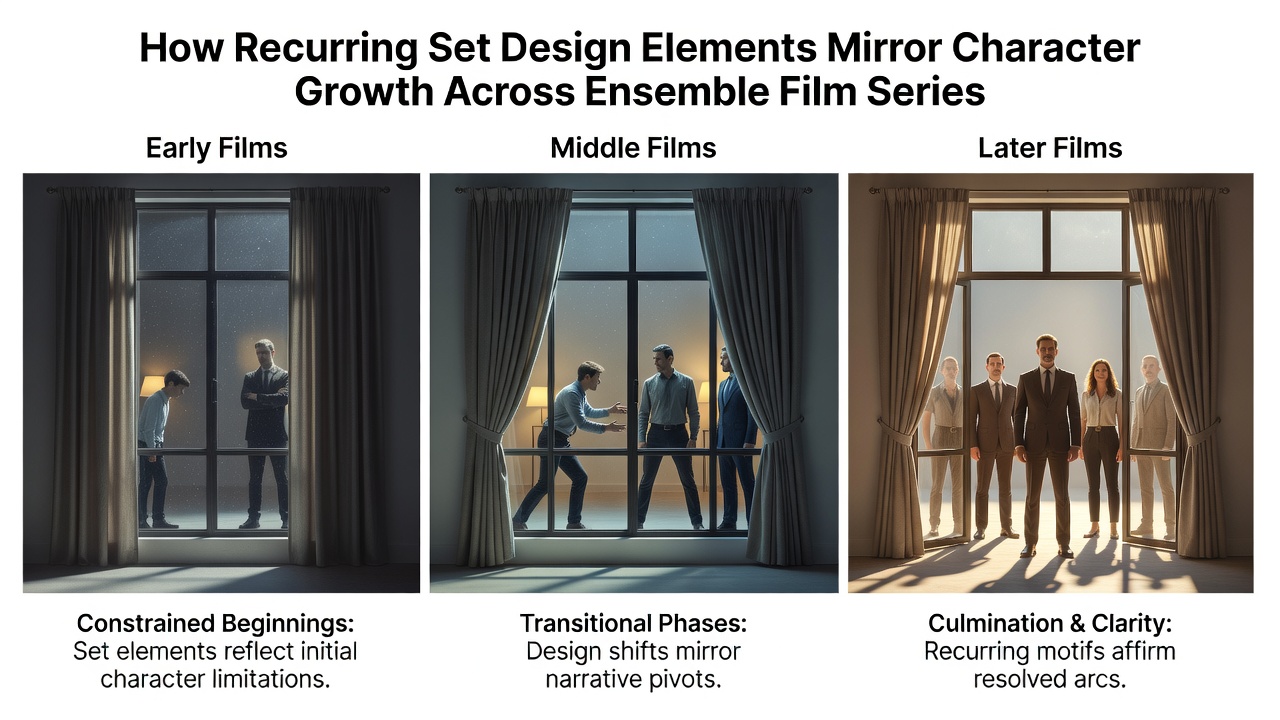
Lighting fixtures and wall textures often receive the most attention in these updates because they affect mood without requiring major structural changes, and cinematographers coordinate with designers to ensure camera angles capture these shifts during key sequences. In July 2026, upcoming ensemble installments from established franchises are expected to continue this practice, building on established motifs rather than introducing entirely new environments. Location managers coordinate with art departments to source materials that age naturally on screen, allowing real-time evolution that aligns with filming schedules spanning multiple years.
Technical Execution and Audience Measurement
Digital previsualization tools now allow teams to simulate motif recurrence before physical construction begins, and figures from European film heritage databases reveal increased use of these technologies since 2018 across international co-productions. Set decorators track viewer engagement metrics through test screenings where focus groups respond to environmental changes, confirming that recurring elements enhance retention when paired with character milestones. Soundstage records show modular set pieces designed for easy reconfiguration between shoots, which supports both budget efficiency and narrative flexibility in extended series.
Color temperature adjustments within the same room across films provide another layer of tracking, with cooler tones often introduced as characters face setbacks and warmer accents added during resolution phases, while technical data from lighting departments documents these choices through RGB value logs. Such methods operate within established continuity rules yet permit expressive variation that aligns with directorial vision for each installment.
Conclusion
Recurring set design elements function as reliable indicators of character growth in ensemble film series by establishing visual baselines that evolve in measured ways, and production documentation confirms these practices span multiple genres and regions. Industry organizations continue to study how such techniques influence audience connection, with ongoing projects examining data from global releases. These methods remain central to how extended narratives maintain coherence while accommodating individual arcs across numerous entries.