Scene Length Patterns Driving Emotional Payoffs in Award-Contending Genre Blends
Willa Roth · Aug 20, 2026
Scene Length Patterns Driving Emotional Payoffs in Award-Contending Genre Blends
Scene length patterns shape emotional payoffs in films that merge genres and reach award contention because editors adjust durations to align viewer expectations across action, drama, and speculative elements while building toward key revelations. Data from multiple productions show that sequences running under thirty seconds often heighten tension in hybrid thrillers whereas those extending past ninety seconds allow character reflection to land with greater weight. Researchers at film studies programs have tracked these shifts through frame-by-frame breakdowns of recent contenders and found consistent correlations between timed cuts and audience retention metrics reported by studios.
Core Timing Structures Observed in Hybrid Releases
Editors working on genre blends frequently employ a three-part rhythm that starts with brief establishing shots, moves into mid-length dialogue exchanges, and concludes with extended emotional beats. This approach appears in titles that combine speculative fiction with family drama because short bursts establish world rules without overwhelming viewers while longer passages deliver the personal stakes that awards voters tend to reward. Analyses conducted by the British Film Institute indicate that such patterns increased in frequency after 2018 as more cross-genre scripts reached production stages.
One notable case involves a 2024 release that alternated twenty-second action fragments with two-minute quiet interludes and achieved both commercial success and multiple nominations. Observers note that the longer segments permitted subtle performance details to register while the quick cuts maintained momentum across tonal shifts. Similar structures surface in projects that blend historical events with contemporary suspense where precise timing prevents one element from overshadowing the other.
Data Patterns from Recent Award Seasons
Quantitative reviews of editing logs reveal that award-contending hybrids average scene lengths of forty-eight seconds overall yet insert clusters of sub-twenty-second scenes immediately before emotional turning points. These clusters create contrast that amplifies the impact of the subsequent longer takes. University-led studies in Canada have cross-referenced runtime data with critical reception scores and documented higher praise for films employing this contrastive method.
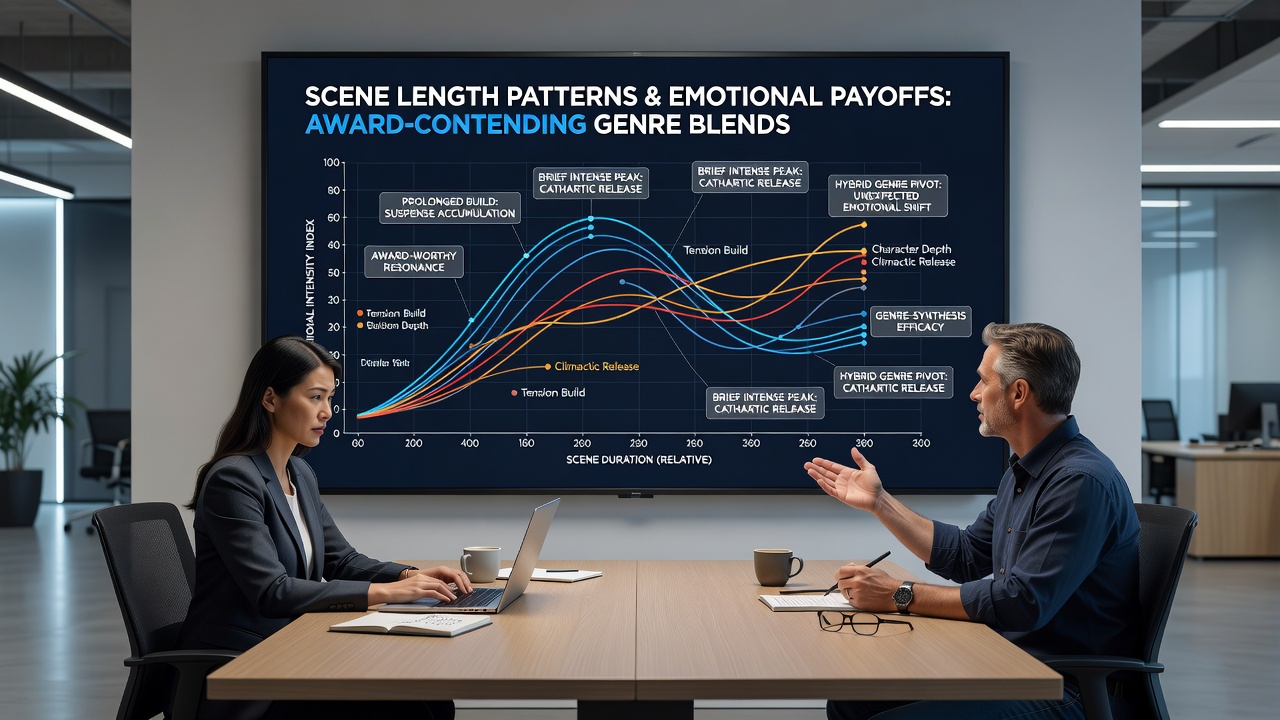
Figures from post-production facilities further demonstrate that directors request revisions to scene lengths more often in the final assembly phase than during principal photography. Adjustments typically shorten introductory sequences by fifteen to twenty percent while extending resolution scenes by similar margins. Such revisions align with findings from industry reports that link final timing choices to stronger emotional closure in blended narratives.
Application Across Different Genre Combinations
Comedy-drama fusions often rely on scenes that begin short and extend gradually to allow jokes to transition into sincere moments without abrupt tonal breaks. Science-fiction action hybrids instead favor rapid cuts during set pieces followed by sustained single-location scenes that explore consequences. Those who've examined multiple Oscar shortlists observe that both approaches succeed when the length changes feel motivated by character decisions rather than arbitrary pacing needs.
Historical accounts of editing suites show teams testing various durations on preview audiences and retaining the versions that produce measurable spikes in engagement during emotional peaks. These tests occur months before wide release and influence final cut decisions across studios of varying sizes.
Conclusion
Scene length patterns continue to serve as a measurable tool for guiding emotional payoffs in films that cross genre lines and compete for major awards. Consistent evidence from editing analyses and institutional reports confirms that deliberate variation in duration supports both narrative clarity and audience connection. As production schedules advance toward future cycles, these timing strategies remain central to how hybrid projects achieve recognition.