The Hidden Craft of Foley Work: How Everyday Sound Effects Build Tension in Ensemble Thrillers
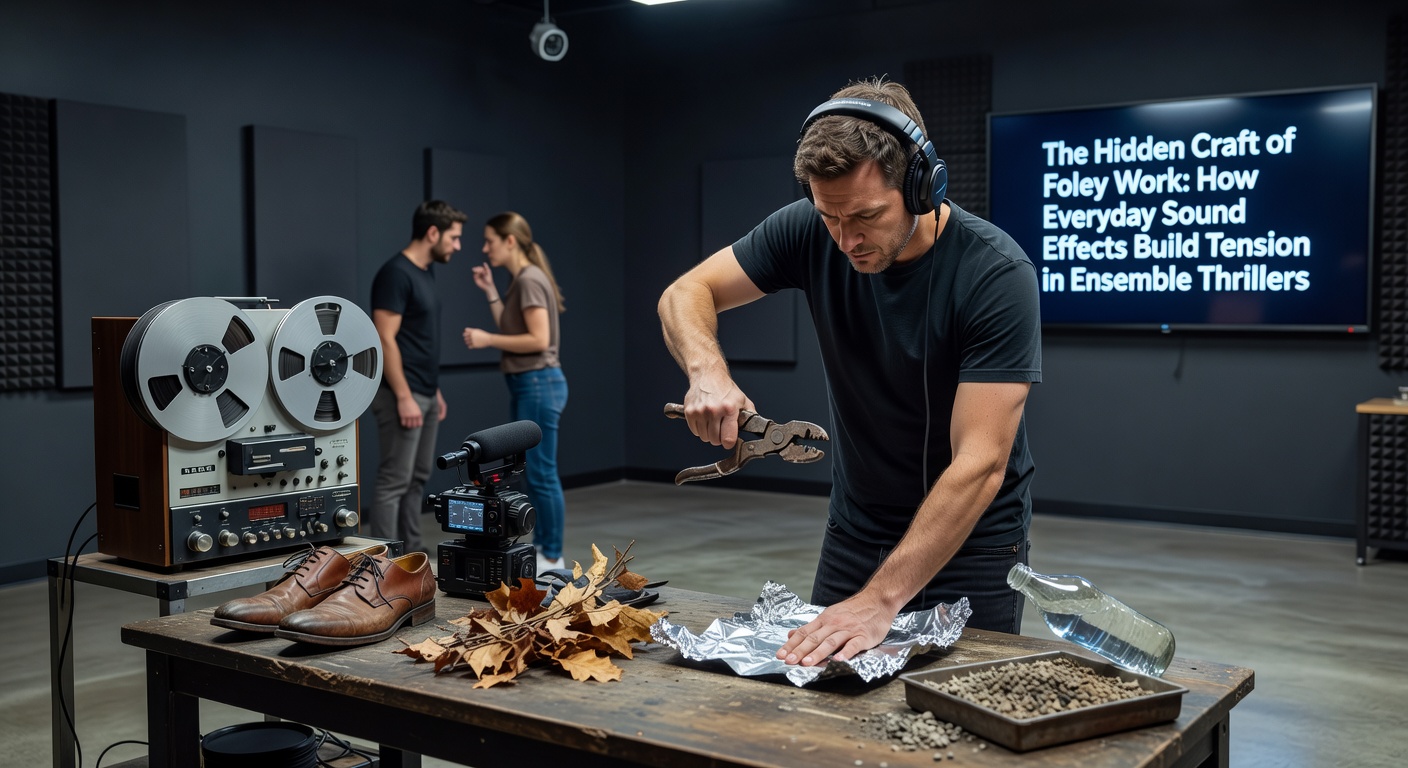
Ensemble thrillers rely on layered audio to heighten suspense among multiple characters, and foley work supplies those precise everyday sounds that sync with on-screen actions. Artists recreate footsteps, fabric movements, and object interactions in controlled studio environments using everyday items like coconut shells for horse hooves or celery stalks for bone breaks, according to documentation from the National Film Board of Canada. These contributions integrate with dialogue and music tracks during post-production, creating an immersive auditory landscape that guides viewer attention across group dynamics.
Core Techniques in Foley Creation
Professionals record individual sound elements on dedicated foley stages equipped with pits of gravel, boxes of debris, and collections of shoes tailored to character movements, while they watch projected footage to match timing exactly. Multiple performers often collaborate on a single scene, assigning one person to handle body movements and another to manage props so that overlapping actions in ensemble sequences remain distinct yet cohesive. Data from industry reports indicate that a typical feature film requires thousands of individual foley cues, with thrillers demanding higher densities of subtle cues to maintain tension during crowded confrontations.
Building Tension Through Subtle Audio Layers
Everyday sounds such as a jacket sleeve brushing against a table or distant door hinges creaking serve as narrative tools that signal character intentions without visual emphasis. In group settings where several actors occupy the frame, these isolated audio marks allow audiences to track shifting alliances or hidden threats as they unfold simultaneously. Research published by university film programs shows that manipulated cloth rustles and footstep variations alter perceived emotional states, directing focus toward specific performers amid ensemble interactions. Technicians adjust volume, pitch, and reverb in mixing sessions to ensure these elements support pacing without overpowering spoken lines.
Applications in Recent Ensemble Thrillers
Films featuring large casts use foley to differentiate character arcs through signature sound profiles, such as heavier tread for antagonistic figures contrasted with lighter steps for vulnerable ones. One study revealed that precise synchronization of prop noises with group movements intensifies anticipation during pivotal meetings or chases involving multiple participants. Preparations for May 2026 releases continue to emphasize these methods as directors seek to differentiate crowded thriller narratives through auditory detail rather than overt visual effects.
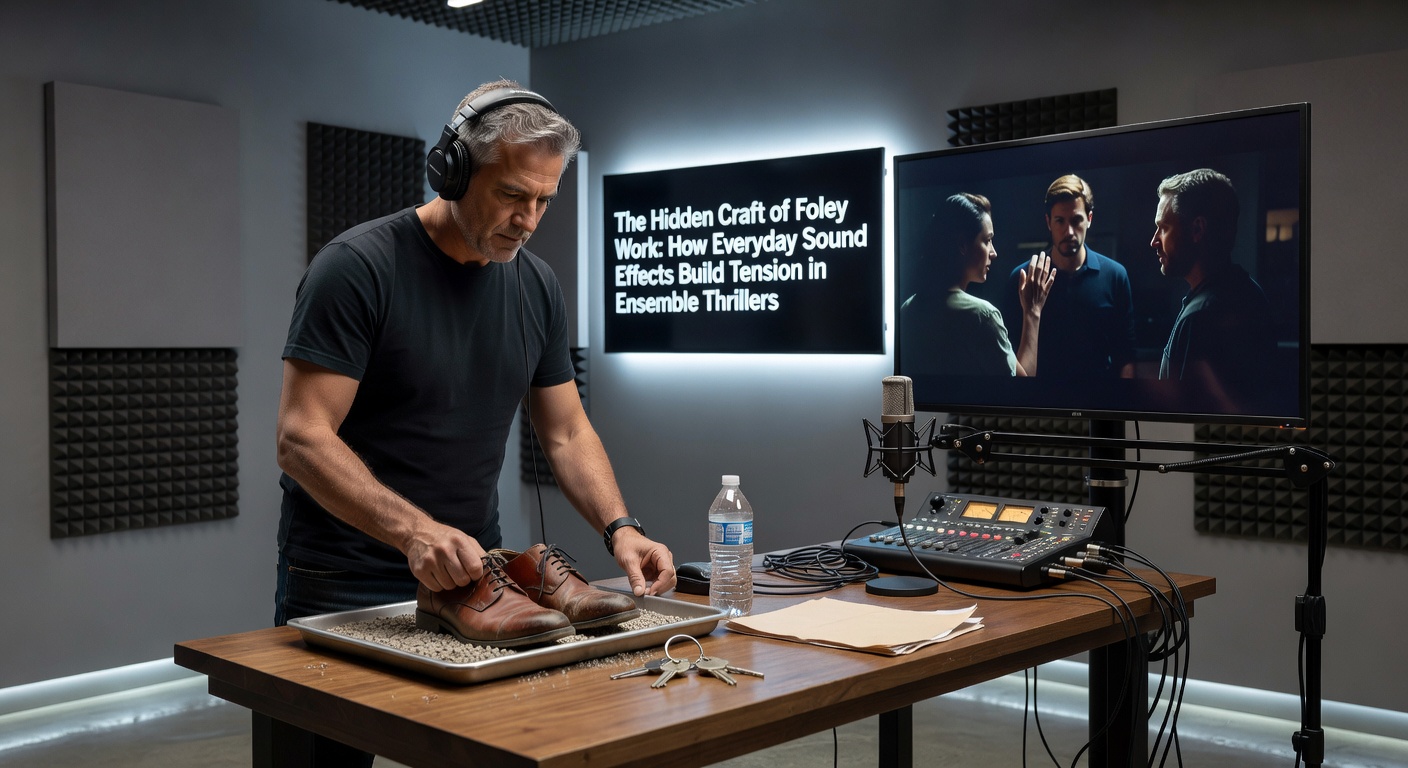
Techniques have evolved with digital tools that allow layering of multiple takes, yet practitioners still prioritize physical performance to achieve organic textures that software alone cannot replicate. Observers note that foley teams review scripts in advance to anticipate key tension points, preparing custom props for scenes where characters interact in confined spaces.
Integration With Broader Sound Design
Foley artists coordinate with dialogue editors and music composers to ensure their contributions fill frequency gaps and reinforce spatial relationships among characters on screen. Automated dialogue replacement sessions sometimes incorporate foley elements to maintain consistency when original location audio proves insufficient for tension-building purposes. Figures from professional organizations demonstrate that budgets allocated to foley have increased alongside the complexity of ensemble plots, reflecting its role in sustaining viewer engagement across extended runtime sequences.
Training and Professional Pathways
Aspiring foley practitioners develop skills through apprenticeships and specialized courses that stress observation of real-world acoustics before attempting studio recreations. Programs at institutions across Europe and North America incorporate hands-on modules where students match sounds to test footage featuring group interactions, building proficiency in timing and material selection. Those who advance often specialize in thriller genres because the demand for nuanced everyday effects remains consistent across productions that feature interconnected character networks.
Conclusion
Foley work continues to supply essential auditory components that support narrative tension in ensemble thrillers by transforming ordinary objects into precise emotional signals. The craft integrates physical performance with technical mixing to produce layered soundscapes that distinguish individual character actions within collective scenes, and industry data confirm its expanding presence in upcoming releases scheduled through 2026. Practitioners maintain these standards through ongoing refinement of props and recording methods that align with evolving cinematic requirements.